When people talk about fishing, it usually involves a lot of equipment, from rods and reels to hooks, lines, and tackle boxes loaded with gear. Not many imagine they could catch a fish successfully without them. Still, long before shiny lures and graphite rods, people around the world were catching fish with little more than determination and clever techniques.
Even today, you don’t need to be stranded on a deserted island for these methods to matter. Survival schools teach them, some tournaments celebrate them, and outdoor enthusiasts practice them as both a skill and a thrill.
The Oldest Method in the Book: Hands Only
@jayprehistoricpets HAND FEEDING 🤣 This not so little) catfish was hungry and I caught him on my hand 😜 it called noodling it’s a old style and I was taken by the best Nate Williams Noodling Oklahoma experts and his two amazing sons’ River and phierce 🐟 what an experience of a life time 😅wanted to do this for the last 15 years and it finally came together and this 45 pound I thought it was way bigger lol check out my story for some epic pics. WOW it was my fist hand caught fish a Flathead catfish 🙌🙌 A whole new meaning of being catfished lol as it was way way bigger and cooler that I could have ever dreamed up 😮 Living the dream 💭 With an epic family of fishing fun 😂 • • • • • • • #wow #wildlife #awesome #fun #animals #animallovers #reelvideos #weekend #weekendfun #beautiful #saturday #vibes #noodling #catfish #catfishfishing #fishing #tik #tok #tiktok #tiktokanimals ♬ original sound – Jay Prehistoric
Hand fishing, or noodling, is the most talked-about method. It’s especially popular in the southern United States, where catfish are large, plentiful, and known to hole up in underwater crevices. The idea is to find a hole, slip your hand inside, wait for the catfish to latch on, and pull it out. In reality, it’s a battle of strength and nerve. Catfish can weigh 50, 60, or even 90 pounds, and once they bite, you’re in a tug-of-war underwater.
This practice goes back centuries. Native American groups were documented catching catfish by hand as early as the 18th century, and likely much earlier. Today, states like Oklahoma and Texas host noodling tournaments where competitors wade into lakes and rivers to wrestle out the heaviest fish they can find. In 2023, two men pulled a 98.7-pound flathead from Lake Tawakoni in Texas, believed to be one of the largest hand-caught catfish in the state.
Of course, noodling carries risks. Along with the possibility of losing to a powerful fish, there’s the chance of sticking your hand into a hole occupied by a snapping turtle, water snake, or even a beaver. Drowning accidents have happened when noodlers get pinned underwater. For those reasons, some states regulate or restrict the practice.
A Softer Touch: Trout Tickling
This is another barehanded tradition developed across the Atlantic. Trout tickling was mentioned in English writings as far back as Shakespeare’s time. It uses finesse instead of force. The angler reaches under a stream bank or shallow pool and gently strokes a trout’s belly. The fish becomes still, almost dazed, which then makes it possible to scoop it onto shore.
This method doesn’t involve wrestling massive catfish, but it does require patience and steady hands. It’s been romanticized in literature as much as it’s been practiced in real life.
Building Traps from Almost Nothing
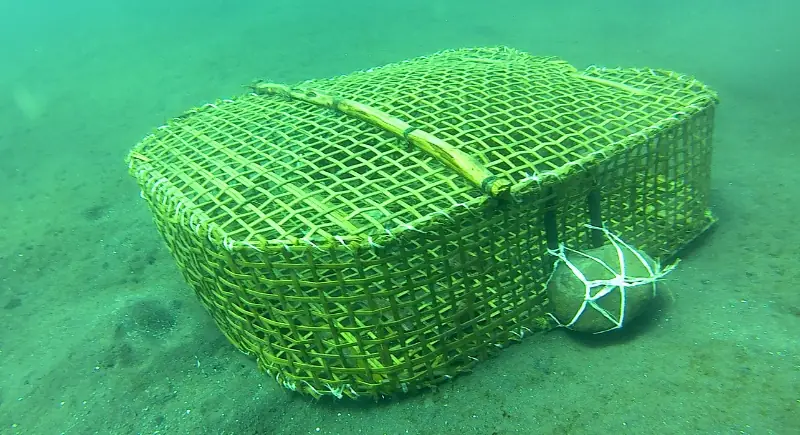
For people who prefer patience over plunging their arms into holes, traps are an effective no-gear solution. They create a one-way system where fish swim in but can’t get back out. Ancient versions were made from woven reeds or stone walls placed in tidal zones. When the tide went out, fish were left behind, easy to collect. Modern improvisations are just as practical.
A plastic bottle with the top cut and inverted makes a quick trap for minnows or small fish. Larger versions can be fashioned from sticks, vines, or netting. In survival scenarios, baited traps left overnight can provide food with little effort. While not as flashy as noodling, traps show the clever ways people have worked with nature rather than against it.
If you can’t build a trap and hand fishing feels too risky, hooks and lines can still be made without store-bought gear. Early fishers carved hooks from bone, shaped them from thorns, or bent pieces of shell. Even today, survivalists can turn safety pins, nails, or wire into hooks.
A line can be twisted from plant fibers, bark, or strips of fabric. You can then add some bait to recreate the basic rod-and-line method without carrying tackle.
Some cultures also discovered that certain plants contain compounds that briefly stun fish. Crushed roots or leaves added to slow-moving water can make fish sluggish enough to be collected by hand. However, this technique is less common today due to environmental concerns.