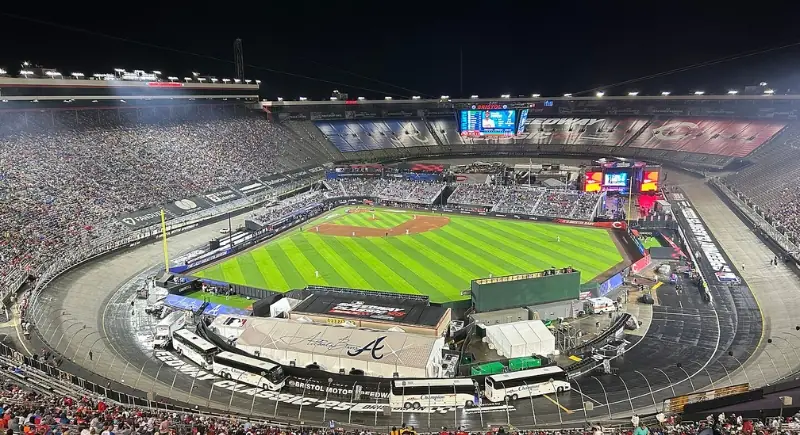
What happens when you mix a manicured baseball diamond with a concrete race track? Major League Baseball gambled on a surprising answer this summer by staging its first-ever game in a NASCAR venue. The “MLB Speedway Classic” in Bristol, Tennessee, between the Atlanta Braves and Cincinnati Reds was a grand, four-year plan to merge two distinct fan cultures and pastimes.
The unprecedented 91,032 tickets sold shattered the regular-season attendance record that had stood since 1954. It seemed nothing could go wrong, but as the clock ticked toward first pitch, the league’s perfect vision revealed a series of questionable decisions and unexpected fiascos that would turn a historic night into a test of endurance.
A Big Swing for Baseball in NASCAR Country
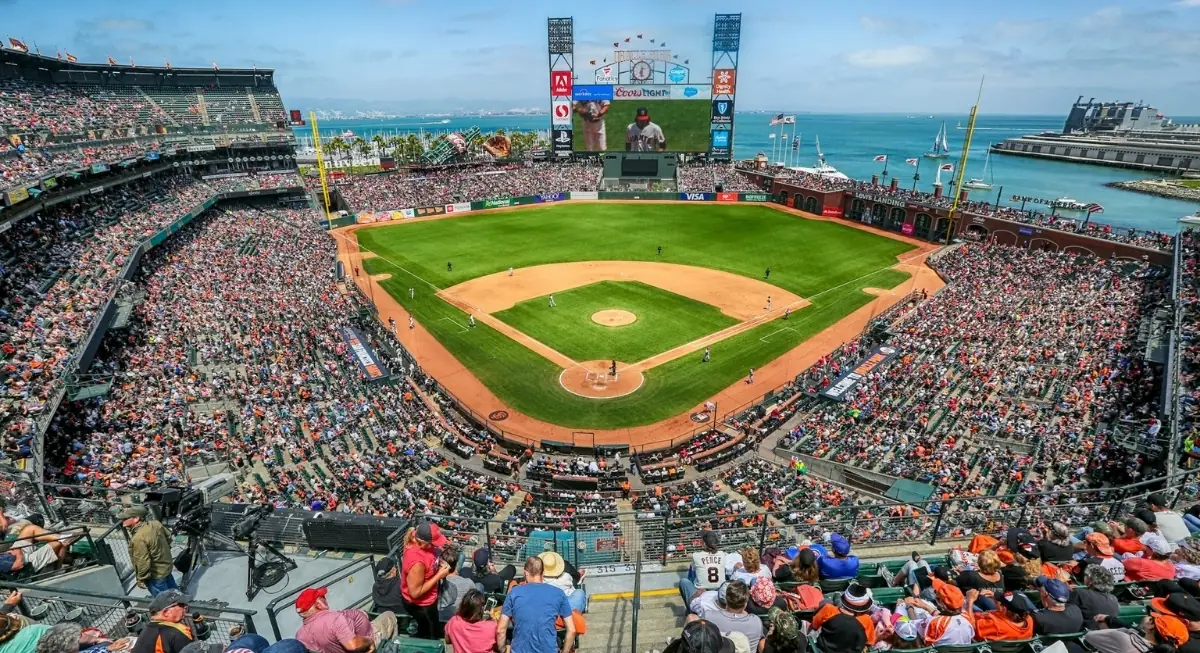
MLB has spent the last decade experimenting with “jewel events” in unique locations to reach new audiences. There was the Field of Dreams in Iowa, London Series games, and even a one-off at Fort Bragg. This was the next escalation: a baseball diamond inside a venue built for 150,000 racing fans.
The crossover appeal seemed obvious. NASCAR and MLB share a Southern fan base, a love of tradition, and, in recent years, a need to capture younger audiences. Jeremiah Yolkut, MLB’s senior vice president of global events, framed it as a chance to be “fast and bold.” The league leaned in hard to the theme.
Race cars carried the teams around the track before the game, home run celebrations triggered laps by a “Home Run!” car, and country music acts like Tim McGraw set the tone in a massive fan zone filled with Ferris wheels, batting cages, and Southern-fair food.
It was also a rare opportunity for this region to host big-league baseball. Bristol straddles the Tennessee-Virginia border, and with MLB franchises hundreds of miles away, many fans in attendance had never seen a regular-season game in person. As Braves first baseman Matt Olson put it, “I just can’t believe they did this just for one game.”
The Spectacle Before the Storm
The Speedway Classic was more like a county fair than a ballgame, as pickup trucks rolled proudly across the infield. NASCAR champions Kyle Busch and Chase Elliott threw ceremonial first pitches alongside Hall of Famers Johnny Bench and Chipper Jones.
Even with some seating areas tarped off due to obstructed views, the sheer size of the crowd dwarfed anything you’d see in a typical ballpark. In the stands, license plates from across the country confirmed the event’s draw.
Between innings, fans raced go-karts, launched baseballs over the track banks, and waved checkered flags. Eli White’s two home runs for the Braves rolled onto the track beyond left field and triggered that victory lap from the home run car. For all the talk about growing the game, this was a masterclass in atmosphere.
Then the rain came. And with it, the problems.
Rain on the Parade
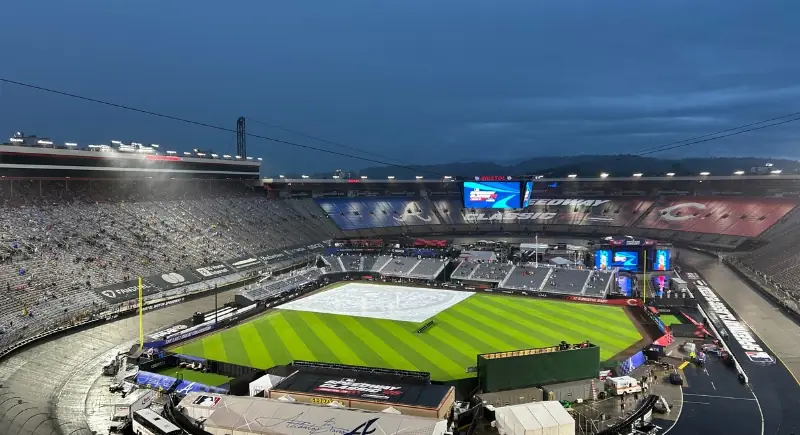
Eastern Tennessee summers are notoriously stormy, something locals could have warned MLB about.
The skies opened minutes before the first pitch. After a two-hour and 17-minute delay, the game began, but another downpour halted play before the first inning ended. The suspension pushed the remainder of the game to Sunday afternoon.
There was also another series of frustrations. During the first delay, concession stands ran out of food and beer. Long lines and slow service left fans grumbling. The stadium’s isolated location with little public transit or rideshare support meant thousands slogged through the rain to reach distant parking lots.
On social media, comparisons to Fyre Festival began popping up. One fan called it “the worst logistical experience” they’d ever had at a game.
When the gates reopened Sunday, the stands were noticeably thinner. Some fans had travel plans they couldn’t change, while others simply didn’t want to return. MLB, perhaps acknowledging Saturday’s shortages, allowed fans to bring in outside food and drinks on Sunday. The league might have salvaged some goodwill with that decision, but the damage to the weekend’s momentum was clear.
Even the record-breaking crowd number carried an asterisk. The speedway’s press box along the third-base line left thousands with obstructed views, and ticket checks at section entrances were lax enough that seat upgrades became an unspoken part of the fan experience.
A Game Worth the Wait—Sort Of
When play resumed Sunday, Braves rookie Hurston Waldrep took the mound after being called up overnight, earning his first MLB win in a 4–2 Atlanta victory. Cincinnati’s Chase Burns, MLB’s No. 2 prospect and a Tennessee native, flashed his 100-mph fastball in his lone inning of work.
There were still moments of fun, like a mini go-kart race during a break or a timely playing of “Rocky Top” that brought the house down. But the energy never fully matched Saturday’s pre-delay buzz. For some fans, the novelty had worn off.
Lessons for the Future
The Speedway Classic proved MLB can dream big and deliver a spectacle unlike anything else in sports. It also proved that ambition needs meticulous execution. Weather contingency planning, better food supply management, and honest ticketing about sightlines would go a long way toward ensuring the next big event doesn’t leave fans damp and disappointed.
If MLB can take the lessons learned here and apply them to its next “jewel game,” the league will be better for it.