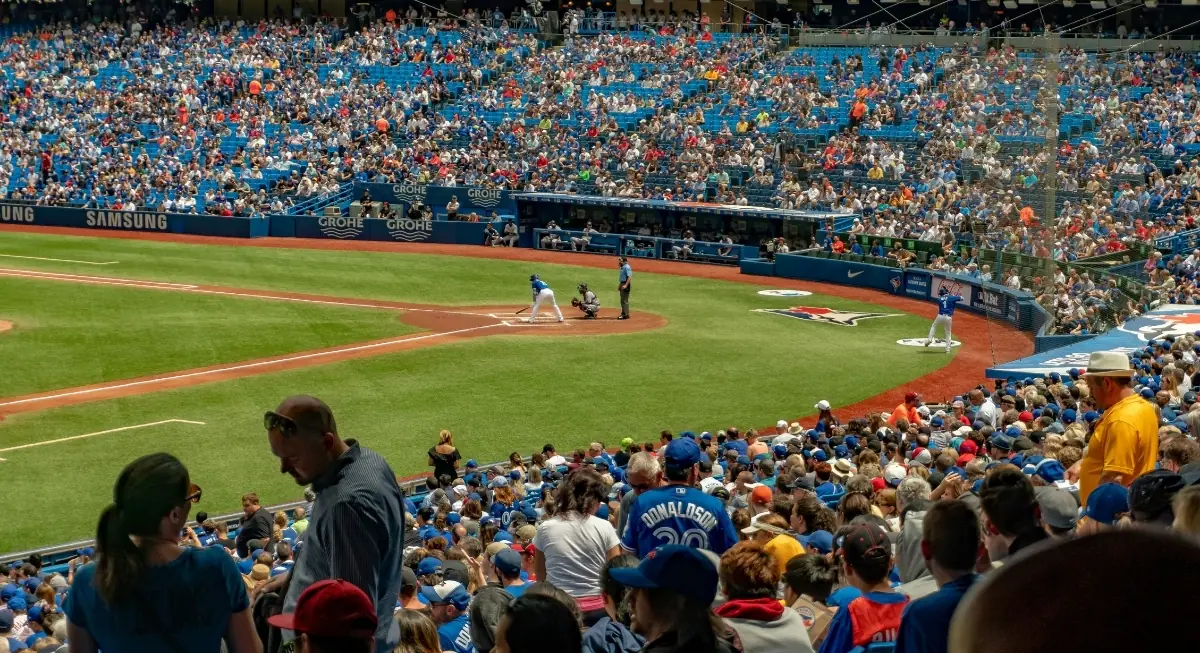
When 2025 began, the Toronto Blue Jays were not on anyone’s shortlist of contenders. A brutal 2024 season had left the team battered, and they finished last in the division. Even the front office’s record-breaking 14-year, $500 million contract extension for Vladimir Guerrero Jr. seemed like more of a desperate attempt to keep hope alive than a confident step toward the future. Many observers saw a franchise stubbornly clinging to the past.
However, halfway through the season, the conversation has shifted. Instead of spiraling further, Toronto has reestablished itself as a legitimate force. And you probably wouldn’t guess the root of their resurgence, which is part of why it’s so intriguing.
Who’s Fueling the Revival?
Surprisingly, the story of the 2025 Blue Jays isn’t one of external reinforcements swooping in to save the season. In fact, most of their splashy offseason moves went sideways. Big-ticket additions like Anthony Santander and Andrés Giménez haven’t delivered the expected returns, and Jeff Hoffman has struggled to lock down the ninth inning.
Instead, the turnaround has been fueled by players who were already in the clubhouse, veterans and youngsters alike, who chose to rewrite their own storylines. This internal revival has been the team’s defining characteristic and is what makes their rise so compelling.
Bo Bichette embodies this resurgence as clearly as anyone. Once considered the perfect complement to Guerrero, his 2024 was derailed by injuries and inconsistency, which drew questions about whether he had peaked too soon. This year, he has answered decisively. Bichette is back among the league leaders in hits and has rediscovered the contact skills and power that made him one of the American League’s most productive shortstops earlier in his career.
His reduced strikeout rate has made him an even tougher out, and in a contract year, he has positioned himself as one of the most valuable free agents on the horizon. Toronto may have trouble keeping him long-term, but for now, he is driving their lineup forward.
Then there is George Springer, who was once viewed as an expensive mistake, entering his mid-30s. After a steep decline in 2023 and 2024, Springer has defied expectations by showing flashes of his prime form during his Houston days. His ability to lay off pitches outside the strike zone has forced opposing pitchers into mistakes.
The Supporting Cast Steps Up
The supporting cast has proven just as crucial. Catcher Alejandro Kirk has rediscovered his disciplined approach by raising his average back toward .300 and stabilizing the middle of the order.
Daulton Varsho, finally healthy after battling multiple injuries, has rediscovered his home run swing and given the lineup more depth. And perhaps the most surprising development has been Addison Barger’s growth.
Once a raw rookie struggling to adjust, he has emerged as a legitimate threat in the middle of the lineup. Together, these contributions have steered the team’s focus away from depending solely on big-ticket stars.
Instead of relying on players they didn’t get—the endless flirtations with Shohei Ohtani, Juan Soto, and others—Toronto finally invested confidence in what it already had.
Smart Deadline Moves Build Depth
Management’s approach has also evolved. In prior years, the Blue Jays seemed to define themselves by near misses in the free-agent market. But this time, their trade deadline moves emphasized depth and balance.
The addition of Shane Bieber, recovering from surgery, was a gamble with long-term upside, while relievers Seranthony Domínguez and Louis Varland brought much-needed reliability to the bullpen. These moves have addressed clear needs and reflected a new, pragmatic strategy.
At the plate, the team’s identity has shifted as well. Toronto now emphasizes patience and contact with one of the league’s lowest strikeout rates. This adaptability gives them a different kind of edge, one that could prove decisive in the playoffs, where elite pitching usually neutralizes all-or-nothing offenses.
October Will Be the True Test
The real test, of course, comes in October. Playoff baseball has been unforgiving for Toronto in recent years, with multiple early exits despite promising regular seasons. This time is different. The roster looks more balanced, the clubhouse appears steadier, and the offense has taken on a new character.